

In 2025, the Arches ecosystem saw significant strides, supported by the dedicated engagement of community members and partners, with new implementations, software releases, shared resources, and the launch of a formal governance framework, including in-person gatherings and exchanges.
Growing Arches Governance
The Arches Project reached a major milestone in 2025 with the formal launch of its new governance framework, which became fully operational. This was initiated in January with finalization of a new Arches Project Governance Charter. The Getty Conservation Institute (GCI) – primary sponsor of Arches since 2012 – invited organizations that have been long-standing contributors to the Arches Project to become the initial Arches Governance Member institutions. Fifteen Governance Member organizations from around the world agreed to have representatives contribute their experience and expertise through three dedicated committees: Project Steering, Technical Advisory, and Community Advisory. Beginning in spring 2025, the three committees met virtually every two months. This culminated in November when the GCI hosted a 3-day series of meetings at the Getty in Los Angeles bringing together for the first time 21 representatives from 13 Governance Member organizations, as well as Getty, serving on all three committees. Several shared priorities emerged for 2026, including governance operational enhancements, software development improvements, and plans for advancing an Arches web accessibility standard.
Collaborations & Software Releases
Collaboration between service providers, heritage organizations, and the Arches community at large led to significant software development in 2025.
The major release of Arches v8 in June introduced features for better speed and performance, alongside improved data modelling functionality with new ways to version and configure Arches resource models.
In September, the v1 release of two Arches extensions – Arches Querysets and Arches Controlled Lists – provided new and improved ways to efficiently manage data in Arches. Controlled Lists, which replaces the Arches v8 Reference Data Manager (RDM), offers a more robust tool for creating thesaurus and vocabulary data.
Development on purpose-focused Arches applications was full-steam ahead in 2025, with our website now highlighting pages about the unique Arches solutions for distinct types of heritage data:

Version 2.0 of the Arches for Science (AfS) application was released, through development supported by the GCI, and a new AfS demo site was made available, providing an interactive way to test features such as image annotation, workflows, visualization of 2D analytical instrument data, and more. Throughout 2025, development progressed on a complementary application, Arches for Reference and Sample Collections (RaSColls), with software development also supported by the GCI and requirements provided by the GCI Science department.
Development of the Arches Lingo application also advanced, supported by the GCI and with software requirements provided by Historic England. A beta version was released in September 2025, ahead of a v1 release planned for March 2026.
Other software development work included finalization of the Arches QGIS plugin by Knowledge Integration, with collaboration, testing and feedback occurring on the Community Forum (and the release of v1 in January 2026). Arches data modelling work this year included creation of the Ogee Arches package, an Arches starter implementation package following the Linked Art standard (developed by Getty Digital and Takin.Solutions).
Powered by Arches
We learned of and shared many Arches implementations (or implementations in progress) during 2025, including the following:
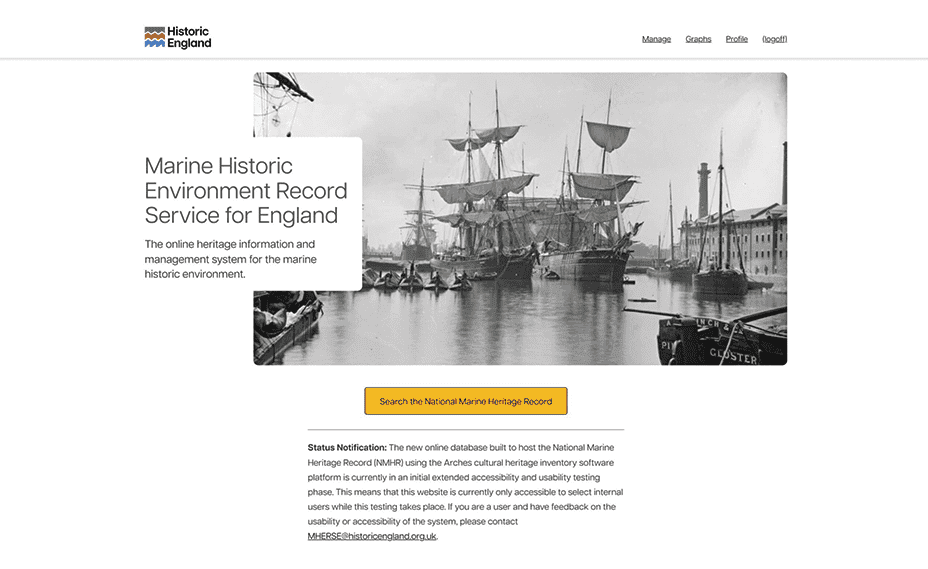
- Government agencies: Portico: East Sussex Historic Environment Record; England’s Marine Historic Environment Record; the MEGA-Jordan database transition to Arches
- NGO projects recording endangered heritage: Mapping Archaeological Heritage in South Asia (MAHSA) database; Mapping Africa’s Endangered Archaeological Sites and Monuments (MAEASaM) Demo Database
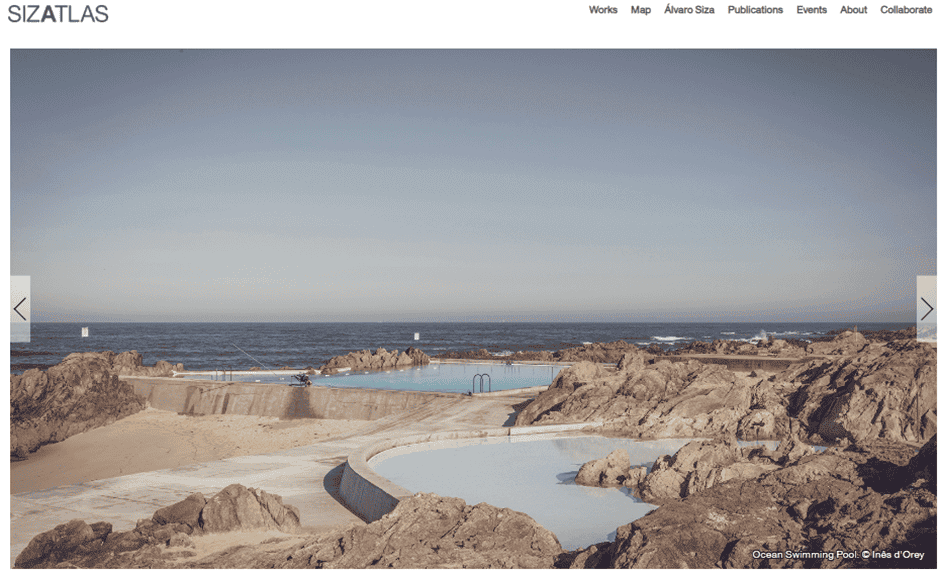
- Research focused: the remodeled Getty Provenance Index; the Bab el-Gasus Cache (BeG) Online; SizaATLAS; Mapping Ancient and Historic Routes using Geo-Spatial Tools (MARG)
Learn more about these varied implementations on the “Who is Using Arches?” webpage.
To note: the Getty Provenance Index (GPI), following its public launch in June, won the 2025 Apollo Award for Digital Innovation of the Year! The GPI hosts over 12 million interconnected provenance records, and through the process of implementing such a large and complex dataset, the Getty Research Institute and Getty Digital (the team behind the GPI remodel) contributed several Arches software enhancements, which will be of great value to the Arches community. Work continues on a custom editable reports extension (currently in development).


All About the Community
Community members shared their Arches-related experience during the year through community group meetings, presentations, conference papers, journal articles, blogs, videos, and more. Explore all the ‘Community Highlights’ of previous bulletins to learn more: May recap, August recap, and December recap.
As for the GCI Arches team, we undertook multiple avenues of information sharing in 2025. This included holding workshops at international conferences, such as the CIPA 2025 symposium in Seoul, Republic of Korea (delivered with representatives from the Dunhuang Academy and Auckland Council) and the CAA 2025 conference in Athens, Greece (joined by representatives from Takin.Solutions and the Max Planck Institute for Geoanthropology). We also presented in online formats to new audiences, such as presenting in the Islamic World Educational, Scientific and Cultural Organization’s ICESCO Heritage Center webinar series.
Colleague from Historic England and members of the GCI Arches team also co-authored a new article in British Archaeology magazine, highlighting how Arches is being used to modernize and unify historic environment records throughout the British Isles.
Of course, the Arches developer community came together for the annual in-person Developer Meeting, excellently organized by Arches service provider Flax & Teal Ltd in Belfast, Northern Ireland in April. Forty Arches developers gathered over 3 days, and brought out the best of open source, with the spirit of collaboration and excitement for Arches in full gear. It was immediately followed by an International Arches Hackathon (organized by Farallon Geographics).
Throughout the year, members of the Arches community also gathered virtually through community groups, in quarterly meetings of the Modeling Interest Group and bimonthly meetings of the US Interest Group. The UK Interest Group, after a hiatus, relaunched in November with bimonthly meetings as well. Learn about the renaming of these groups (formerly known as User Groups) here.
New Resources
The Arches global network continued to grow in 2025 with 11 new Arches-related job or bid opportunities posted on the Arches website, more than 70 new members joining the Community Forum, and the addition of new service providers and expanded capacity of existing service providers as noted on the Arches Service Providers page.
In order to support this growth, many new online resources were created in 2025, including:
- Tutorials to accompany the interactive Arches for Science demo site
- Regularly-updated official Arches documentation on Read the Docs, including:
- New and updated Arches Project web pages:
- Blogs and informational videos:
- Blog on how Arches v8 graph versioning creates greater flexibility in data model development, by Farallon Geographics
- Searching by Related Resources in Arches video demo, created by Farallon Geographics
Advancing Our Mission & Gratitude to the Community
In 2025, we furthered the Arches Project mission to support the long-term sustainability of the open-source Arches platform – its use and effective data management – to serve cultural heritage around the world. This was advanced by supporting initiatives to structure, protect, and manage data supporting important heritage work across multiple domains. Arches software touched multiple cultural heritage domains – from acting as a resource for heritage educators, to assisting planning work by public agencies, to facilitating the dissemination of reference data.
We continued our commitment to interoperable and sustainable data management by participating in the FAIR+CARE Cultural Heritage Network, which promotes ethical good practice guidance and digital data governance models integrating FAIR+CARE practices. And in January 2025, as a result of devastating wildfires in the Los Angeles area (the Getty’s home base), we saw firsthand how vulnerable cultural heritage sites can be, as many culturally significant LA places were destroyed, including homes and businesses. Sara Delgadillo, LA City’s Office of Historic Resources’ representative on the Arches Governance Community Advisory Committee, gave a powerful presentation a year following the fires about how HistoricPlacesLA – an Arches-powered database – has been updated to support recovery efforts, climate resilience, and long-term planning for the LA community.
We sincerely thank all who have contributed to growing and strengthening the Arches community this year, with a special thanks to our governance member representatives.
